
Tel: 07866 747 849


The Best Advice on What to use in a Gravel Garden to Suppress Weeds
Gravel gardens have become increasingly popular across West Sussex, offering a stylish, low-maintenance solution that suits both contemporary and cottage-style landscapes. One of the most common questions we are asked when designing gravel gardens is whether a plastic weed suppressant membrane should be installed beneath the gravel, or whether natural alternatives such as cardboard and hessian are a better option.
The answer is not always straightforward. Both approaches have advantages and disadvantages, and the right choice depends on the long-term goals for the garden.
Why Weed Suppression Matters
Before laying gravel, it’s important to consider how weeds will be managed. Without some form of weed suppression, annual weeds can quickly establish themselves in exposed soil, making the garden more labour-intensive to maintain.
However, not all weed barriers perform equally well over time.
The Case for Plastic Weed Suppressant Membrane
Plastic weed membranes, typically made from woven polypropylene, have been widely used in landscaping for decades.
Advantages
Immediate weed suppression
A properly installed membrane provides an effective barrier that prevents many weeds from emerging through the soil beneath.
Cleaner installation
The membrane creates a separation layer between the soil and gravel, helping to keep the gravel surface looking neat in the short term.
Reduced maintenance initially
For the first few years, many homeowners find they spend less time weeding compared with bare soil.
Disadvantages
Weeds still appear
One of the biggest misconceptions is that membrane eliminates weeds entirely. In reality, wind-blown seeds settle in dust and organic matter that accumulates on top of the gravel. These weeds germinate above the membrane, meaning regular maintenance is still required.
Difficult planting
Where gravel gardens include ornamental grasses, perennials, or drought-tolerant planting, holes must be cut in the membrane. Over time these openings can enlarge, allowing weeds to establish.
Environmental concerns
Plastic membranes are manufactured from synthetic materials and eventually degrade. As they break down, fragments can remain in the soil for many years.
Can restrict soil health
Membranes reduce the natural movement of organic matter into the soil and can interfere with earthworm activity and healthy soil ecology.
Replacement costs
After several years, some membranes become brittle or damaged, requiring significant effort and expense to remove and replace.
The Case for Cardboard and Hessian
Many garden designers are increasingly turning to biodegradable materials such as cardboard and hessian (jute) as a more sustainable alternative.
Advantages
Environmentally friendly
Both cardboard and natural hessian break down over time, adding organic matter to the soil rather than leaving behind plastic waste.
Excellent initial weed suppression
A thick layer of cardboard covered with gravel can effectively smother existing weeds while allowing the soil ecosystem to continue functioning.
Improves soil health
As the materials decompose, they support earthworms and beneficial soil organisms, helping to build healthier soils beneath the gravel.
Better for planted gravel gardens
Natural barriers are particularly useful in gravel gardens with extensive planting. Plants can establish more naturally without being constrained by synthetic fabric.
Supports sustainable garden design
For homeowners seeking wildlife-friendly and environmentally responsible gardens, biodegradable materials align well with these goals.
Disadvantages
Shorter lifespan
Cardboard and hessian generally provide weed suppression for one to three years before breaking down.
Not suitable for severe perennial weed infestations
Persistent weeds such as bindweed, couch grass, ground elder or horsetail may require more intensive treatment before a biodegradable barrier is installed.
May require greater early maintenance
As the barrier decomposes, some additional weeding may be required until plants mature and naturally shade the soil.
What We Recommend
In many modern gravel gardens, particularly those designed with drought-tolerant planting schemes, we favour a cardboard-based approach over plastic weed membrane.
A gravel garden should ideally function as a living ecosystem rather than a sealed surface. Healthy soil, well-chosen plants and a sufficient depth of gravel often provide better long-term results than relying solely on a synthetic barrier.
Where troublesome perennial weeds are present, site preparation becomes particularly important. Removing invasive weeds before installation is usually more effective than attempting to contain them beneath a membrane.
The Importance of Gravel Depth
Whichever approach is chosen, gravel depth plays a crucial role in weed suppression. A layer of approximately 40–50mm of gravel is generally sufficient for most ornamental gravel gardens. Too little gravel allows light to reach the soil, encouraging weed growth, while excessive depths can make planting and maintenance more difficult.
Final Thoughts
There is no completely maintenance-free gravel garden. Plastic membranes can provide effective short-term weed suppression, but they often create challenges later and do not prevent all weed growth. Cardboard and hessian offer a more sustainable solution that supports soil health and works particularly well in planted gravel gardens.
For many West Sussex gardens, a carefully prepared site, a biodegradable weed barrier, quality gravel and thoughtful planting design provide the most attractive and environmentally responsible long-term solution.
If you are considering a gravel garden and would like advice tailored to your site, soil conditions and planting preferences, a professional garden design consultation can help ensure the right approach is chosen from the outset.
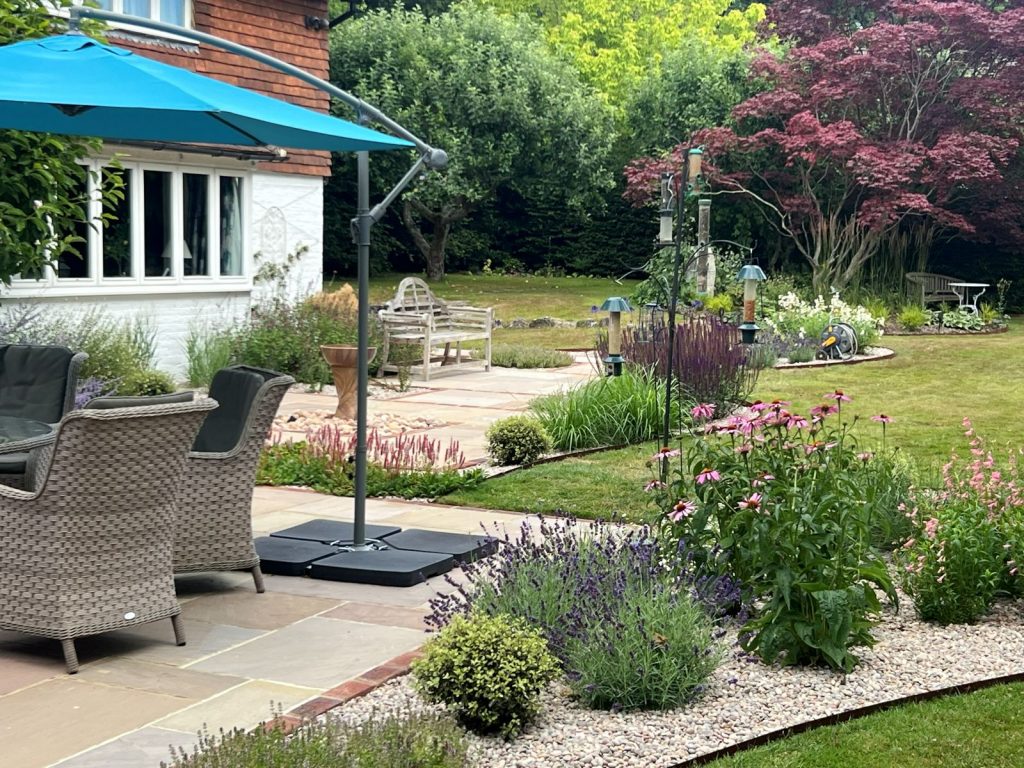
If you would like to find out how we could create a gravel garden in your garden please feel free to contact us, details below: