
Tel: 07866 747 849


The Best 5 Planting Combinations for Late Summer Colour
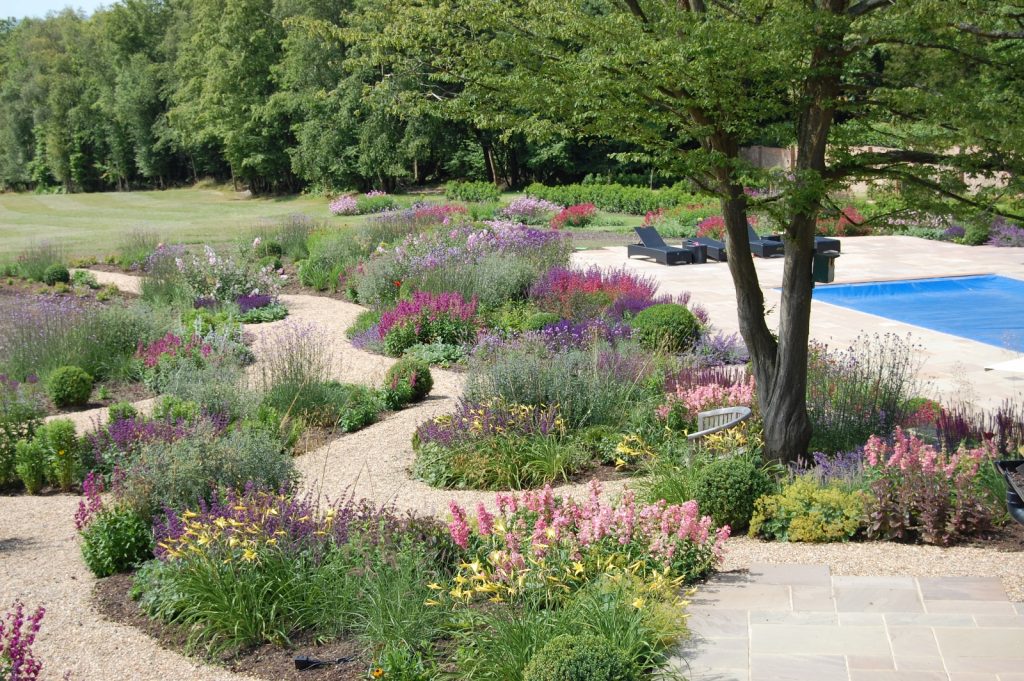
Creating beautiful planting schemes is about much more than choosing individual plants. The most successful borders combine contrasting forms, complementary colours and a succession of interest that carries the garden through the seasons. In the mild climate of West Sussex, we are fortunate to be able to grow an enormous range of herbaceous perennials and ornamental grasses that perform brilliantly year after year.
Here are The Best 5 planting combinations that provide exceptional colour, movement and wildlife value from early summer right through to autumn.
1. The Contemporary Prairie Border
Plants:
- Salvia ‘Nachtvlinder’
- Pennisetum orientale
- Geum ‘Totally Tangerine’
- Verbena bonariensis
This combination captures the relaxed beauty of naturalistic planting. The rich, velvety purple flower spikes of Salvia ‘Nachtvlinder’ provide a dramatic contrast against the soft apricot-orange blooms of Geum ‘Totally Tangerine’. Woven through the planting, Pennisetum orientale adds movement and texture with its graceful, fluffy flower heads.
Adding Verbena bonariensis creates an airy layer that attracts pollinators while allowing views through the border. The result is a planting scheme that feels contemporary, light and effortlessly elegant.
Best for: Sunny borders and modern garden designs.
2. The Cottage Garden Performer
Plants:
- Penstemon ‘Hewells Pink’
- Geranium ‘Rozanne’
- Nepeta ‘Walker’s Low’
- Alchemilla mollis
For months of reliable colour, few combinations can rival this cottage garden favourite. The soft pink flowers of Penstemon ‘Hewells Pink’ complement the violet-blue blooms of Geranium ‘Rozanne’, which flowers almost continuously from June until the first frosts.
Nepeta provides a haze of lavender-blue flowers, while Alchemilla mollis adds a fresh green contrast and softens the front of the border.
This planting combination is informal, romantic and incredibly easy to maintain.
Best for: Traditional gardens, family gardens and pollinator-friendly planting.
3. The Late Summer Fireworks Display
Plants:
- Helenium ‘Moerheim Beauty’
- Aster ‘Mönch’
- Sedum ‘Herbstfreude’ (Autumn Joy)
- Calamagrostis ‘Karl Foerster’
- Persicaria amplexicaulis ‘Firetail’
As the garden moves into late summer, this planting combination delivers exceptional colour, structure and seasonal interest. The rich burnt-orange flowers of Helenium ‘Moerheim Beauty’ provide warmth and drama, while the lavender-blue daisies of Aster ‘Mönch’ create a striking complementary contrast.
To break up the daisy forms, Sedum ‘Herbstfreude’ introduces broad, flat-topped flower heads that emerge soft pink before deepening to rich copper tones in autumn. The vertical spires of Persicaria ‘Firetail’ add a completely different flower shape, weaving through the planting and extending the display well into October.
Anchoring the scheme, Calamagrostis ‘Karl Foerster’ provides strong upright structure and movement, with golden stems that continue to look beautiful throughout winter.
The combination of spires, daisies, umbels and ornamental grasses creates a more dynamic and naturalistic composition that evolves beautifully through the seasons.
Best for: Sunny borders, prairie-style planting and gardens requiring strong late-season impact.
4. The Soft Pastel Border
Plants:
- Penstemon ‘Hewells Pink’
- Aster ‘Mönch’
- Stachys byzantina
- Deschampsia cespitosa
For a more subtle and sophisticated look, pastel tones can be remarkably effective. Penstemon ‘Hewells Pink’ and Aster ‘Mönch’ provide a harmonious blend of pink and lavender flowers, while the silver foliage of Stachys byzantina introduces a calming element.
The delicate seed heads of Deschampsia cespitosa catch the light beautifully, creating movement and softness throughout the border.
This combination works especially well in gardens where a tranquil atmosphere is desired.
Best for: Contemporary country gardens and smaller spaces.
5. The Wildlife-Friendly Summer Border
Plants:
- Salvia ‘Nachtvlinder’
- Geranium ‘Rozanne’
- Geum ‘Totally Tangerine’
- Echinacea purpurea
- Pennisetum orientale
If attracting bees, butterflies and other pollinators is a priority, this combination is hard to beat. Salvia, Geranium and Echinacea are all highly attractive to pollinating insects, while Geum provides early summer colour and Pennisetum adds texture and movement.
The combination of purple, blue, pink and orange flowers creates a vibrant display that remains interesting over a long season.
By allowing some seed heads to remain over winter, you can also provide food and shelter for wildlife during the colder months.
Best for: Biodiversity-focused gardens and naturalistic planting schemes.
Designing Borders That Work All Year Round
The most successful planting schemes are not simply about flower colour. Good garden design considers height, structure, texture and seasonal succession. Ornamental grasses such as Calamagrostis ‘Karl Foerster’ and Pennisetum orientale provide valuable structure long after the flowers have faded, while reliable perennials such as Geranium ‘Rozanne’ and Penstemon ‘Hewells Pink’ deliver months of colour.
In West Sussex, our relatively mild climate allows us to create planting combinations that perform for much of the year. By carefully selecting plants that complement one another in both form and flowering period, it is possible to achieve borders that remain attractive from spring through to winter.
Whether you favour contemporary prairie-style planting, traditional cottage garden borders or wildlife-friendly schemes, thoughtful plant combinations can transform an ordinary garden into an exceptional one.
If you would like to discuss how we can help re vamp your planting please feel free to call, details below: