
Tel: 07866 747 849


The Best Way to Garden In The Local Landscape
Designing Gardens in Steyning: Drawing Inspiration from the West Sussex Landscape
Nestled at the foot of the South Downs, Steyning offers a uniquely rich and varied landscape that provides endless inspiration for thoughtful garden design. From chalk downland ridges to the clay-rich soils of the Low Weald, this corner of West Sussex is defined by contrast, something that can be beautifully reflected in our gardens.
Understanding the local environment is at the heart of creating a garden that not only looks harmonious but thrives over time. Soil, topography, and surrounding ecology all play a crucial role in shaping planting schemes and structural design.
Working with Soil, Not Against It
One of the most defining characteristics of gardens in and around Steyning is the variation in soil types. Move just a short distance and you may find yourself transitioning from free-draining chalk to heavier clay or pockets of sandy heathland soil.
Chalk soils, common along the South Downs, are alkaline and well-draining. While they can be challenging due to their dryness and low nutrient levels, they are perfect for a range of drought-tolerant and Mediterranean-style planting. Plants such as lavender, thyme, and santolina thrive here, as do many native chalk grassland species. Embracing these conditions often leads to elegant, naturalistic planting schemes that require less intervention.
In contrast, the Low Weald is known for its heavier clay soils. These retain moisture well but can become waterlogged in winter and baked hard in summer. Here, careful soil improvement and plant selection are key. Moisture-loving species and robust perennials tend to perform well, and incorporating organic matter can significantly improve structure and drainage.
Sandy soils, often found in heathland areas, offer yet another palette. These free-draining, acidic conditions suit plants such as heathers, grasses, and pines, lending themselves to a softer, more textural planting style.
Topography and Drainage Considerations
Steyning’s position at the base of the Downs means that many gardens are shaped by slope and gradient. Designing with these natural contours is essential.
Sloping gardens can offer wonderful opportunities for terracing, framing views, and creating distinct garden “rooms.” However, they also require careful attention to drainage. Water naturally moves downhill, and without proper planning, this can lead to erosion or water pooling in lower areas.
In chalk landscapes, drainage is often less of an issue due to the porous nature of the soil. However, on clay, managing excess water becomes a priority. French drains, swales, and thoughtful planting can all help to regulate water movement and prevent problems.
Rather than seeing gradients as a challenge, they can be embraced to add drama and structure. A well-designed sloping garden can feel dynamic and immersive, guiding you through the space in a way that flat gardens cannot.
Taking Cues from the Local Landscape
Some of the most successful gardens are those that feel as though they belong to their surroundings. In West Sussex, this means looking closely at the native landscape for inspiration.
Birch trees, for example, are a familiar sight in many local woodlands and heathland edges. Their light canopy and delicate structure make them an excellent choice for ornamental planting, bringing a sense of movement and softness to a garden. Underplanting with grasses and shade-tolerant perennials can echo the natural layering found in the wild.
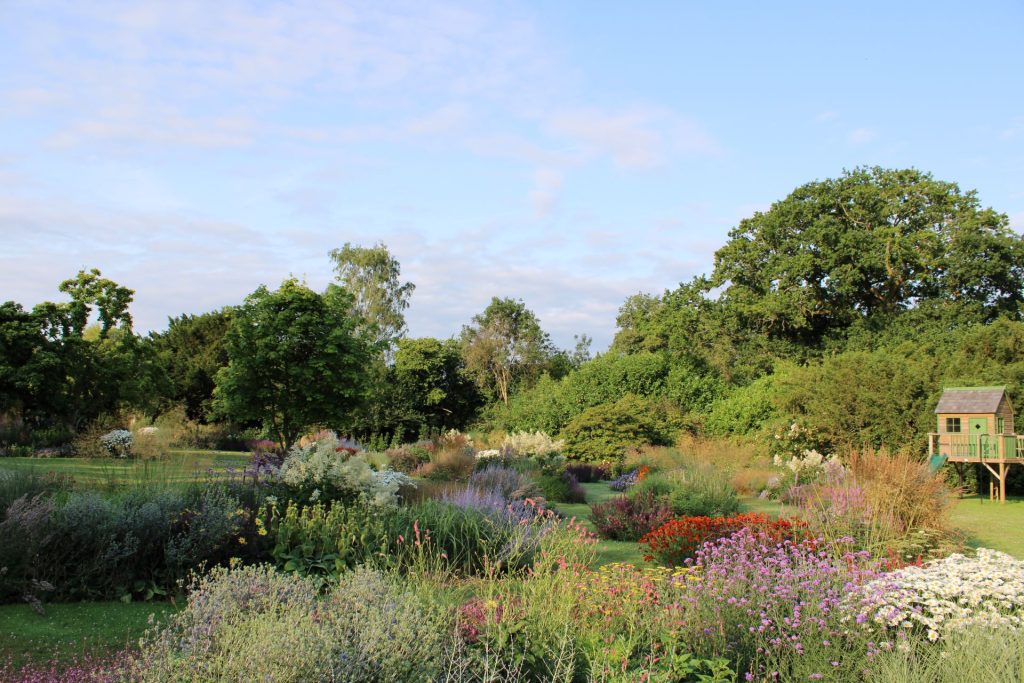
Similarly, hedgerows, wildflower meadows, and copses all offer ideas for planting combinations and spatial arrangement. By mirroring these natural patterns, gardens can feel both grounded and timeless.
Coastal Influences and Microclimates
Although Steyning itself sits slightly inland, the proximity to the coast has a subtle but important influence. Coastal gardens in the wider area must contend with salt-laden winds and exposed conditions, favouring hardy, wind-tolerant plants and often more restrained planting palettes.
Even inland, microclimates play a significant role. South-facing slopes can be warm and dry, while sheltered valleys may retain moisture and support more lush planting. Understanding these nuances allows for more tailored and successful design decisions.
A Personal Connection to Place
For me, the landscapes of West Sussex are not just a source of professional inspiration but a personal passion. I have a particular love of chalk downland—the sweeping, open expanses, the resilience of the planting, and the ever-changing quality of light. There is something deeply calming about these environments, and I often seek to capture that sense of openness and simplicity in my work.
Equally compelling are the ancient woodlands of the Low Weald. These spaces feel timeless, layered, and rich with texture. The dappled light, the seasonal shifts, and the diversity of plant life all inform a more immersive and naturalistic approach to garden design.
Bringing the Landscape Home
Ultimately, designing a garden in Steyning and the surrounding areas is about more than aesthetics. It is about creating a space that responds to its environment, celebrates its setting, and feels connected to the wider landscape.
By understanding the soil beneath our feet, the shape of the land, and the character of the local ecology, we can create gardens that are not only beautiful but enduring spaces that feel as though they have always belonged.
Whether it’s a chalky hillside garden, a sheltered woodland retreat, or a coastal-inspired planting scheme, the landscapes of West Sussex offer a wealth of inspiration just waiting to be translated into thoughtful, meaningful design.
If you would like to discuss your garden and how best to draw inspiration from the local landscape please feel free to contact Alex, details below: