


This months plant of the month goes to Hamamelis.
When the garden settles into January’s soft, muted tones, Hamamelis—or witch hazel—quietly steals the show. Its spidery, ribbon-like blooms pop open on bare branches, glowing in cheerful shades of yellow, copper, and red. Add in the gentle, citrusy perfume that drifts across the garden on cold air, and it’s no wonder this shrub is such a winter favourite. Few plants look this good when everything else is taking a long seasonal nap.
The history of Hamamelis is just as appealing. The genus has roots (quite literally) in both North America and Asia. Hamamelis virginiana was valued for centuries by Indigenous peoples for its astringent, healing qualities. The ornamental stars we grow in our gardens today mostly come from crossing H. japonica with H. mollis. These hybrids—Hamamelis × intermedia—were developed in the early 1900s, with the Arnold Arboretum in the U.S. playing a big part in creating tougher, more fragrant, and more colourful varieties. Cultivars like ‘Jelena’, ‘Diane’, and ‘Pallida’ remain beloved for their glowing winter displays.
Witch hazels are adaptable and fairly easy-going, thriving in moist but well-drained, moderately fertile soils. They do have a preference for more acidic conditions, which means many of us in the Steyning area may struggle to grow them successfully in the ground. That said, they’re perfectly happy in a pot with the right compost—so you can still enjoy their winter magic without battling the soil.
They perform best in full sun to light shade, where the low winter light can make their flowers shine. Give them a bit of space so their elegant, wide-spreading branches can do their thing, and they’ll need only the lightest of pruning—usually just a tidy-up after flowering.
As for companions, Hamamelis looks wonderful with early bulbs like snowdrops or Eranthis hyemalis, which form bright carpets beneath the branches. Evergreen grasses such as Carex add year-round texture, while colourful-stemmed shrubs like Cornus sanguinea ‘Midwinter Fire’ echo the warm tones of orange and red-flowered witch hazels. Later in the season, plants like Hydrangea quercifolia or Acer palmatum keep the border interesting once the witch hazel has finished its show.
In the quiet heart of winter, Hamamelis proves the garden is never truly dormant—it simply saves some of its most magical moments for the coldest days.
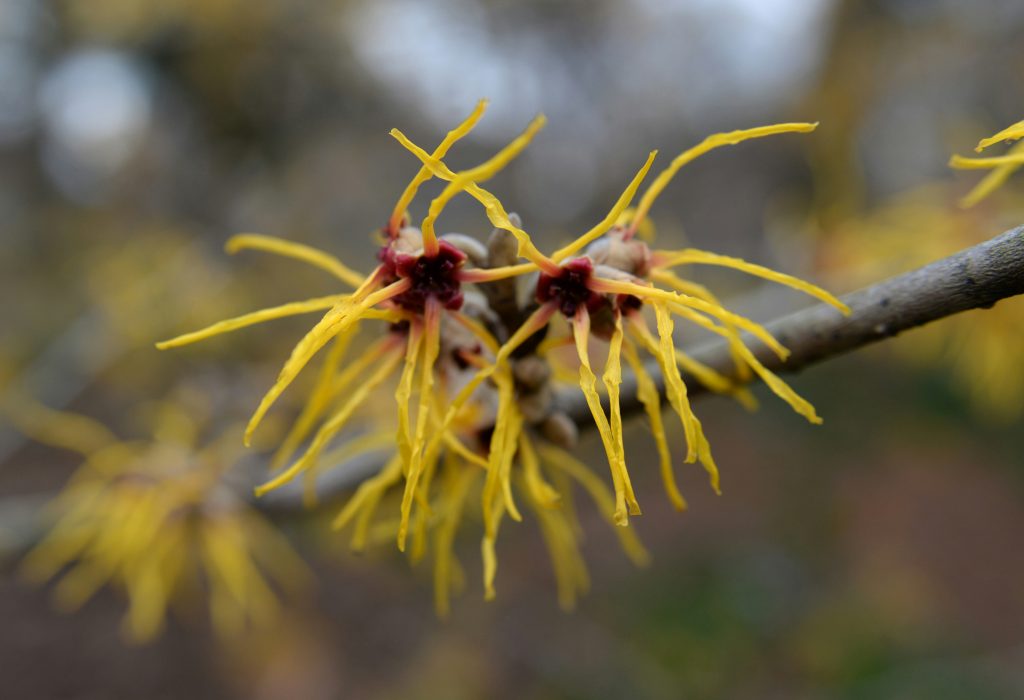
Photo by Laura Ockel on Unsplash
Alex Bell is an award winning Garden Designer based in Steyning, West Sussex. If you would like to discuss your garden project feel free to contact on the details below.

Main Caption Photo by Annie Spratt on Unsplash